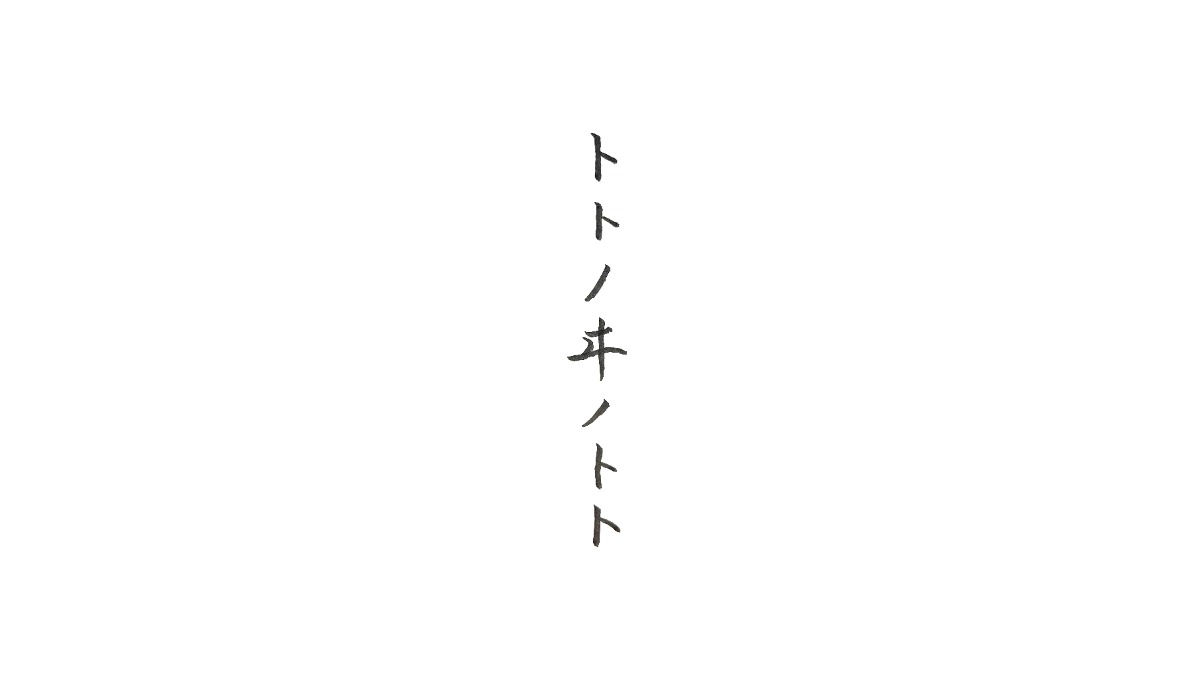
totonoinototo
totonoinototo at HIGASHIBABA
In the forest of a sacred mountain
a little closer to the gods
living fully in the present moment
purifying mind and body
no excess, no deficiency
in a just-right state
——totonoinototo
An Immersive World — Beyond the Ordinary
totonoinototo is a journey inspired by the spirit of Nakaima — a way of settling the mind into the present moment — gently guiding body and mind toward a “just-right” state through a flow of totonoi activities.
Where the mind grows still, and each moment is lived.
A stay at a historic shukubo on Mt. Mitake, a hidden mountain sanctuary in Tokyo.
HIGASHIBABA is a historic shukubo — a traditional shrine lodging that has long welcomed visitors.
Conventional accommodation plans or room-only stays are not available.
Instead, totonoinototo is offered — an experiential stay rooted in Shinto philosophy, designed to bring mind and body into harmonious balance. Guided by the HIGASHIBABA family, who serve as Oshi (Shinto priest and shrine guide), as well as Totonoshi (attunement guide) of Musashi Mitake Shrine, each stay is shaped with deep knowledge, care, and a sense of continuity.
The Essence of Nakaima
Nakaima — the practice of quieting the mind and dwelling fully in the present moment — lies at the heart of this journey.
Through a sequence of totonoi activities that unfold with the passage of time, your mind and body are gently guided into a state of natural balance.
A curated series of around ten activities flows seamlessly from arrival to departure.
Within this continuous experience, you are invited to spend time as though you are the protagonist of your own story, in a world set apart from the everyday.
Totonoi Activities — Awakening the Senses
“薬草 Yakuso” (Herbs), “禊 Misogi” (Purification), “清 Kiyome” (Immersion), “祓 Harae” (Ritual), “おさがりお重 Osagari Oju” (Blessed Meal), “和 Nagomi” (Unwinding), “昏々 Konkon” (Tranquil Rest), “祷 Inori” (Prayer), “おさがりわっぱ Osagari Wappa” (Blessed Bento), and “言霊 Kotodama” (Words)…
These experiences range from traditional practices to more contemporary approaches, such as an outdoor sauna, each thoughtfully designed so that every moment feels meaningful.
Additional activities may also be offered by the Totonoshi, tailored to the weather and your condition on the day.
Stay in a Designated Cultural Property
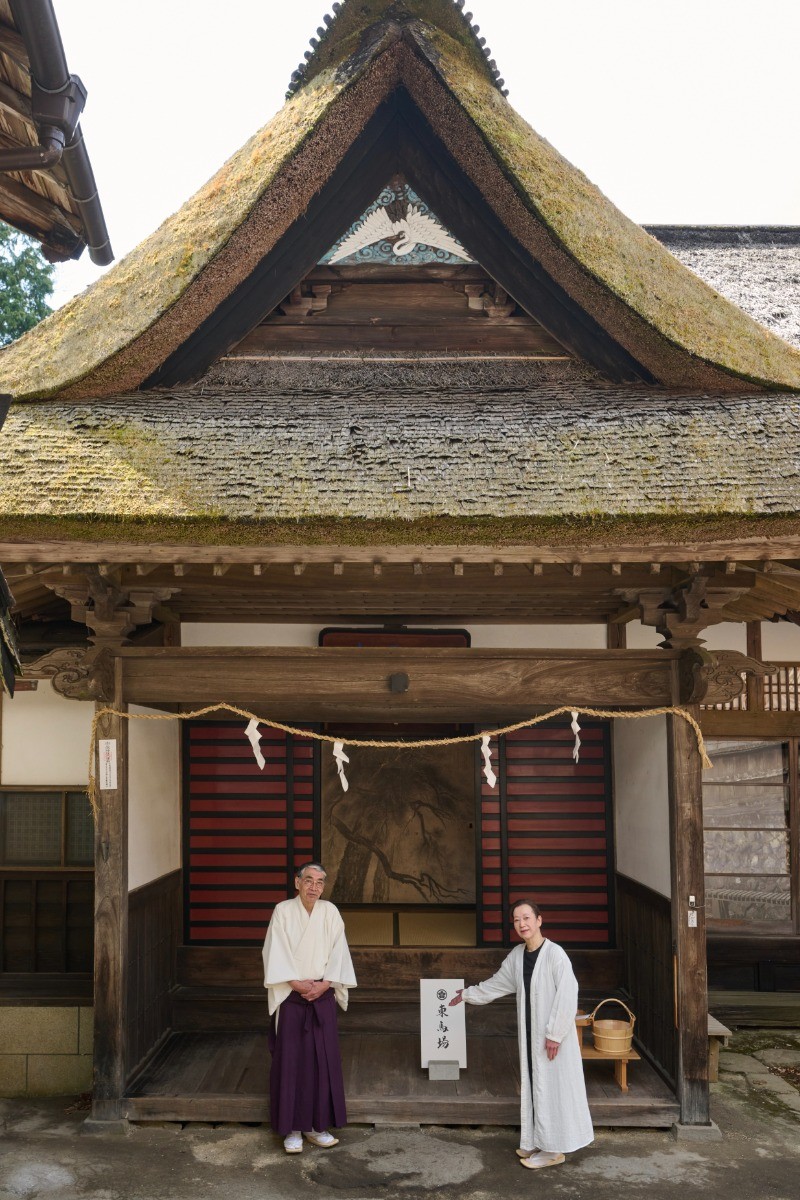
The thatched-roof residence of HIGASHIBABA stands at an elevation of 816 meters on Mt. Mitake, surrounded by rich nature.
Built in 1866 (Keio 2, late Edo period), the structure is designated as a Tangible Cultural Property of Tokyo.
Still serving as the family’s residence, it has long welcomed visitors as a historic shukubo, carrying forward generations of tradition.
Stepping inside, you may feel as though you have entered a world where time quietly overlaps.
Guided by Keepers of Living Tradition
This journey is guided by the 14th and 15th generations of the HIGASHIBABA family.
Carrying forward over 400 years of history, they continue to serve as Oshi and Totonoshi of Musashi Mitake Shrine.
While preserving tradition, they continue to take on new challenges, drawing on their rich knowledge and individuality.
Their passion for offering a distinctive experience is felt throughout every part of the journey.
A Historic Space of Quiet Comfort
Guests of totonoinototo enjoy exclusive use of a 144.09㎡ guest space.
This space includes SHINZEN-noma, a room with a family shrine, along with four interconnected tatami rooms, all linked by sliding fusuma doors.
It may be experienced as one expansive space or arranged into more intimate, private settings.
With its high ceilings creating a sense of openness and views of the surrounding forest, the space invites quiet reflection and ease.
Relax and take in the distinctive atmosphere of HIGASHIBABA.
A Sample Itinerary
Day 1
13:30 - 14:00 | Welcome ー Check-in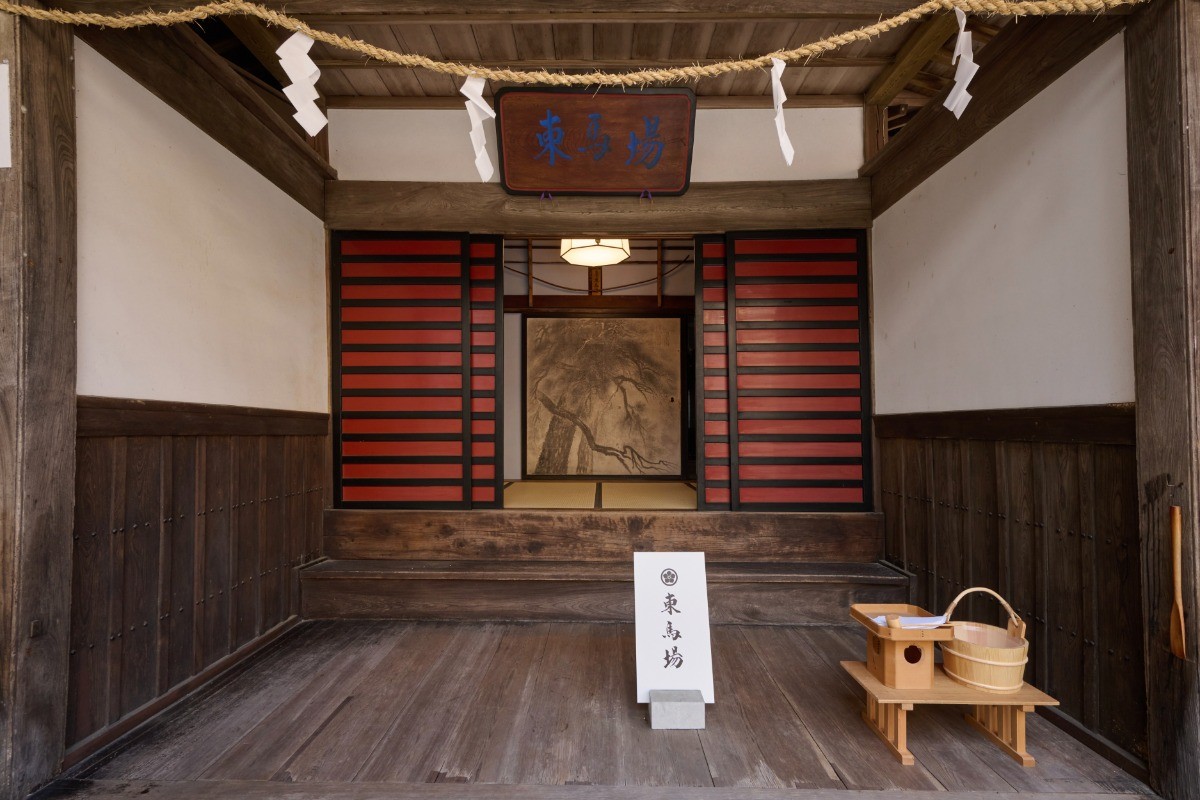 You will be warmly welcomed by the family at the front entrance.
From this moment, your journey of Totonoi Activities begins.
:
:
14:00 | 薬草 Yakuso ー Herbs
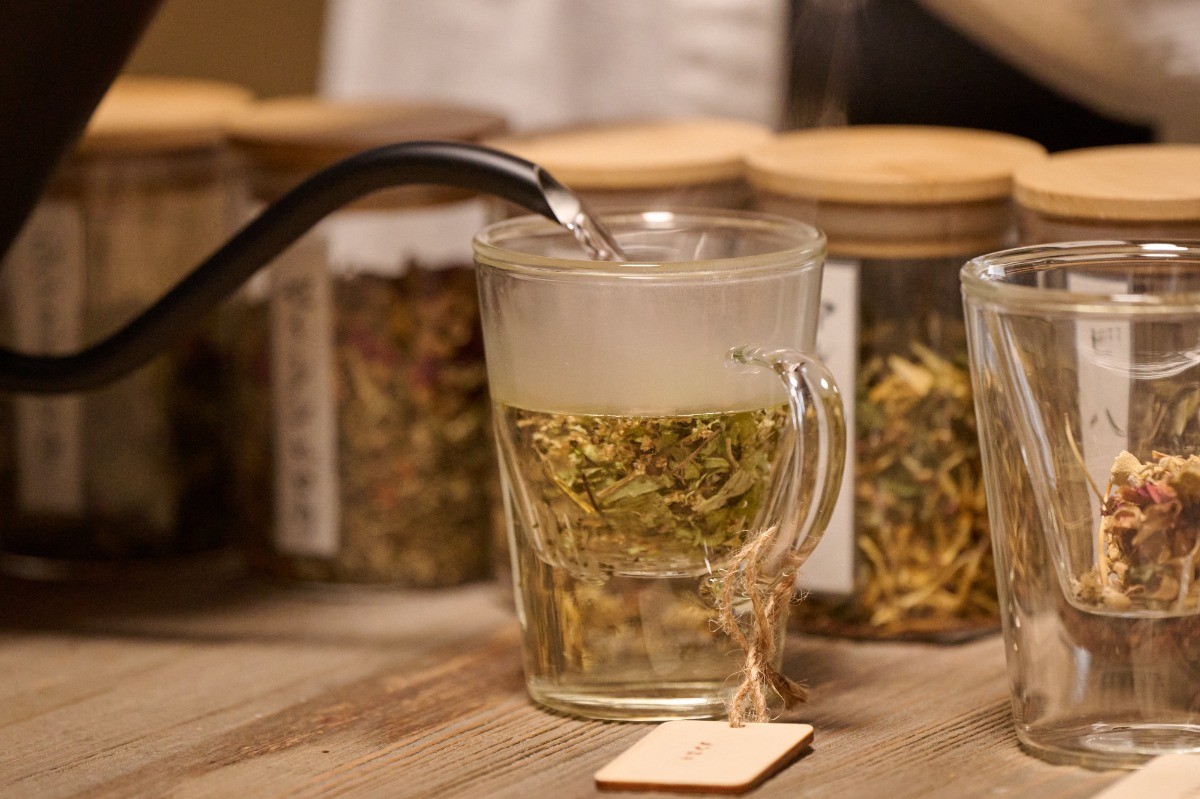 A moment wrapped in the fragrance of herbs, blended by the Totonoshi of HIGASHIBABA, a certified phytotherapist trained in herbal practices.
As the steam rises, it gently carries you away from the everyday and into a quieter flow of time.
:
:
15:30 | 禊 Misogi ー Purification
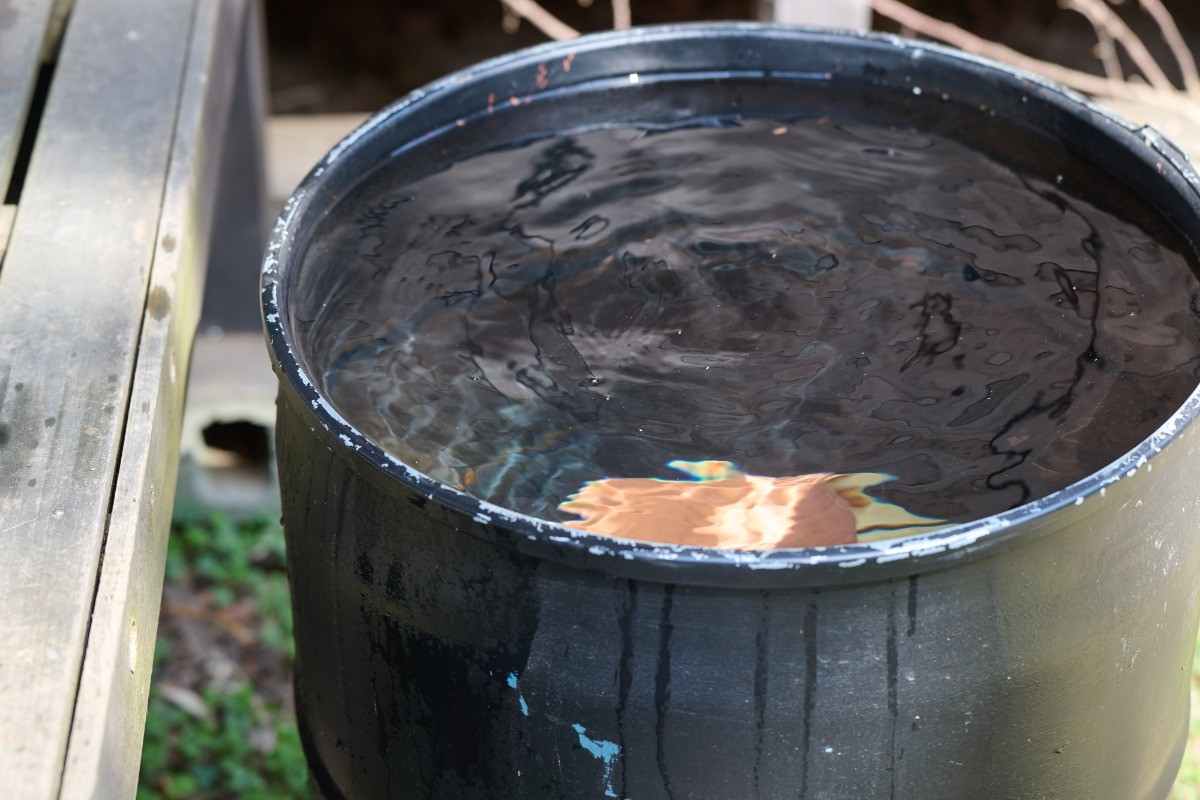 Misogi steam bath, a Goemon-style cold bath, and time in the open forest air.
Surrounded by birdsong, the murmur of the stream, and the gentle movement of the trees, the body and mind gradually unwind.
As this is an outdoor sauna, guests are kindly asked to wear a T-shirt and shorts.
:
:
17:00 | 清 Kiyome ー Immersion
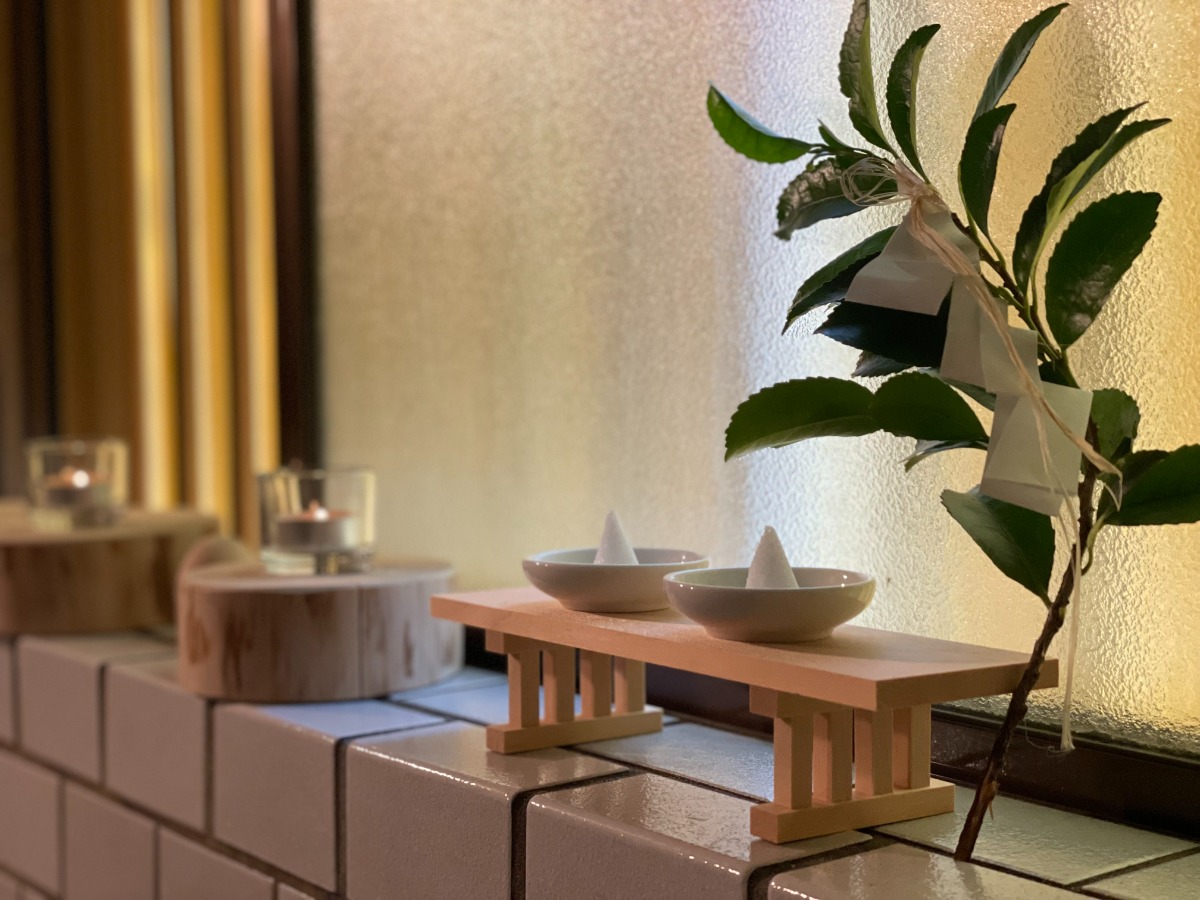 Step into a bath gently scented with hinoki cypress.
Taking purifying salt in your hands, softly chant “harae tamae, kiyome tamae” as you ease yourself into the water.
:
:
18:00 | 祓 Harae ー Ritual
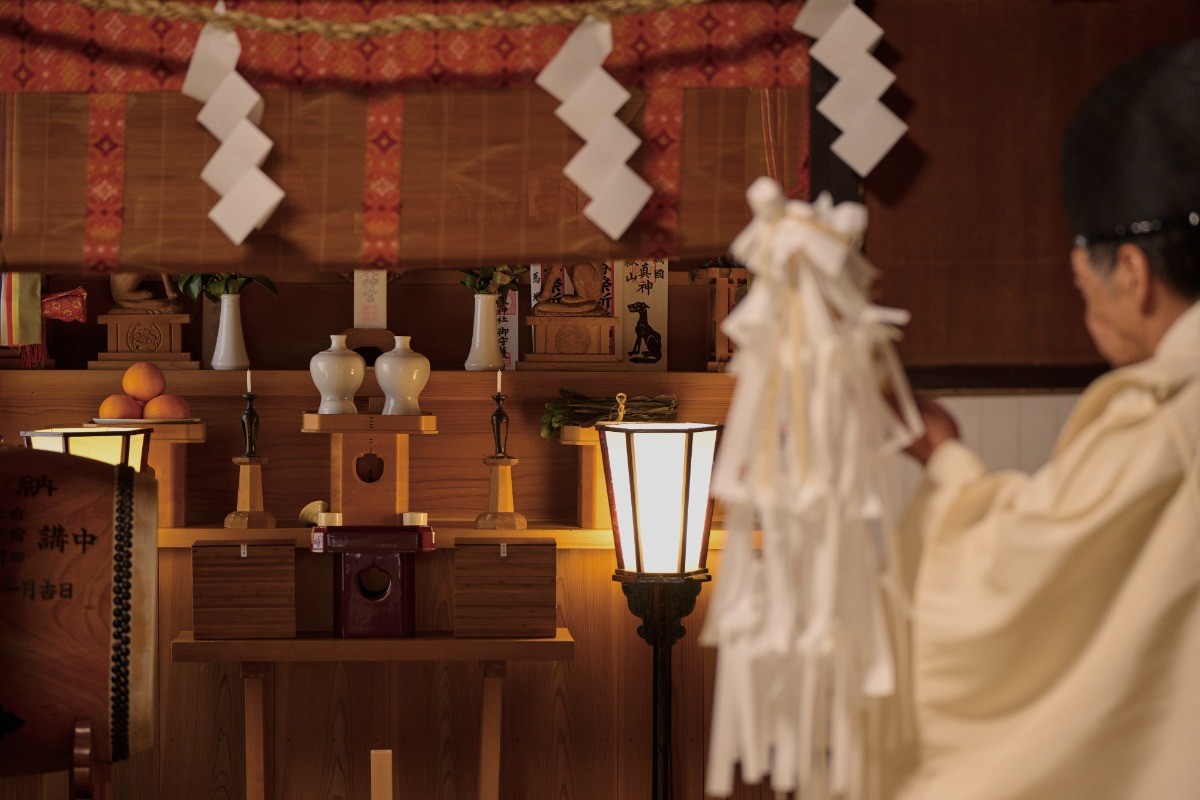 A purification ritual conducted by a Shinto priest in SHINZEN-noma.
The drum resounds, and norito rises to fill the space.
:
:
18:15 | おさがりお重 Osagari Oju ー Blessed Meal
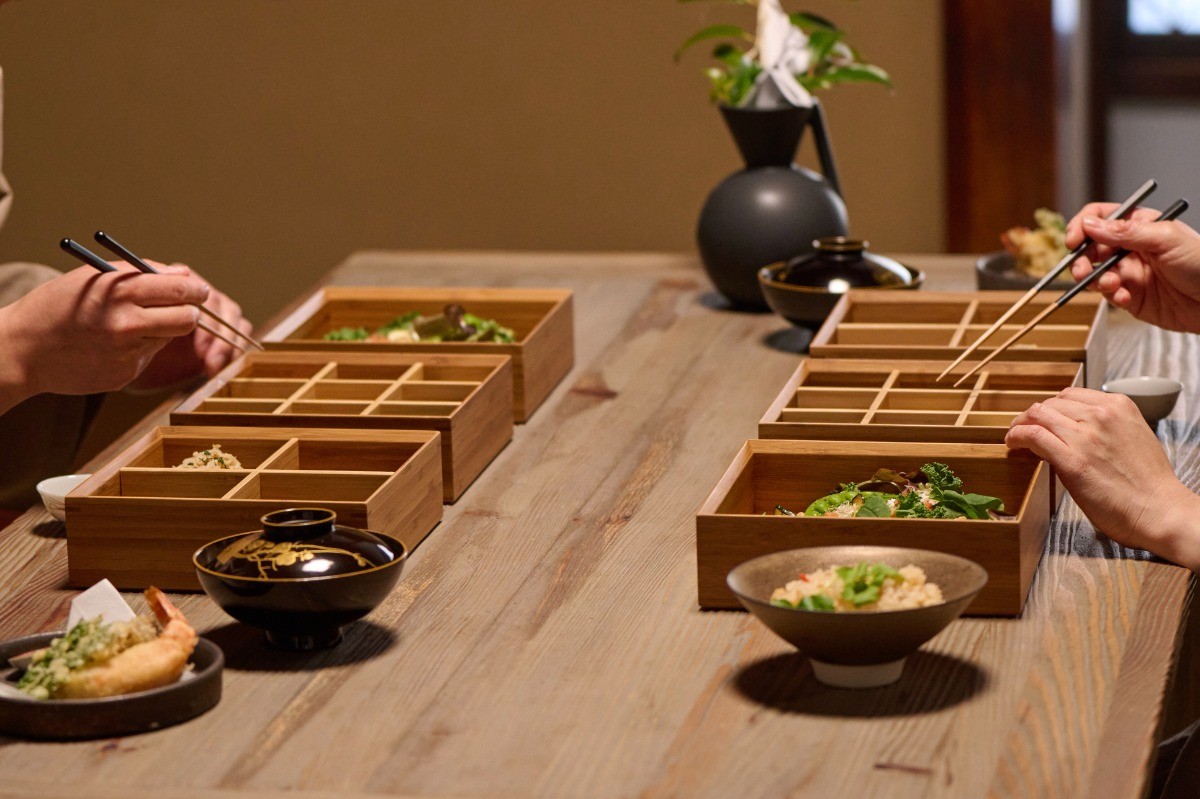 A three-tiered oju, first offered to the deities, is shared as osagari.
Each dish, prepared with care by the Totonoshi, gently nourishes both body and mind.
:
:
19:45 | 和 Nagomi ー Unwinding
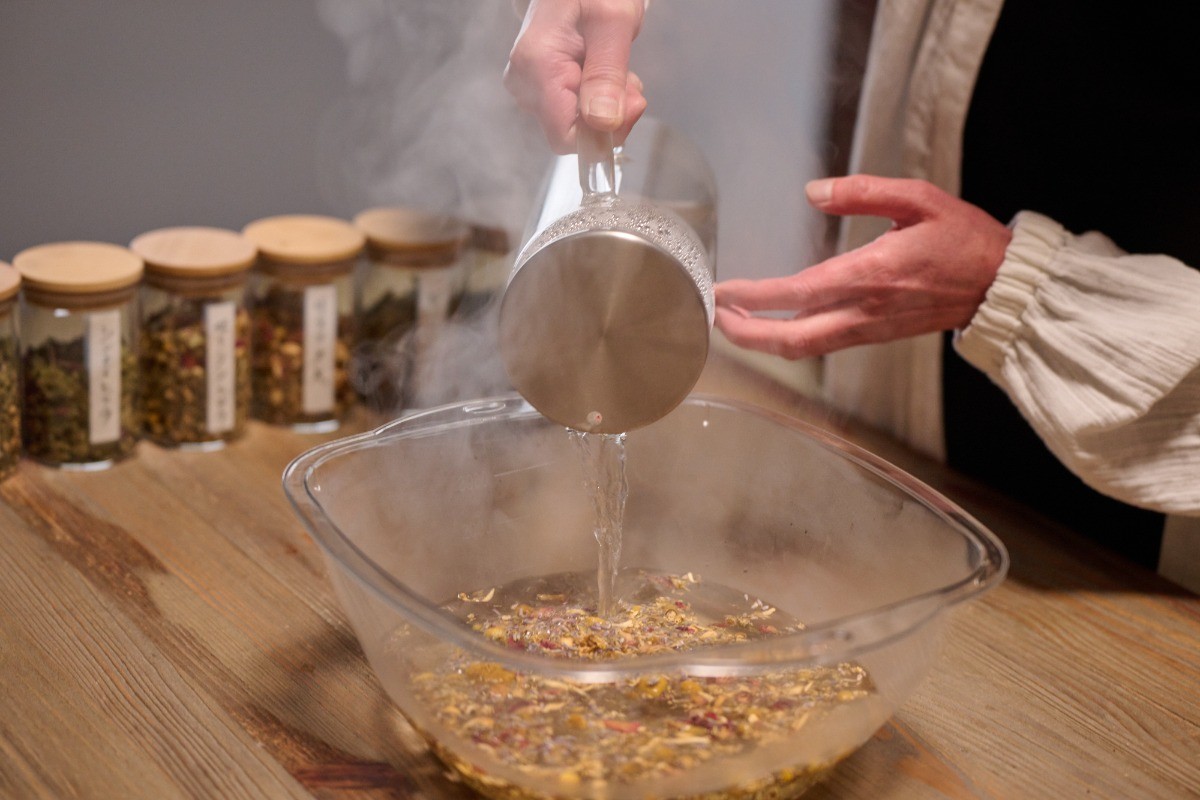 An aromatic herbal steam and a warm hand bath, prepared to ease you into restful sleep.
Breath slows and deepens, gently leading you toward a quiet night of rest.
:
:
21:00 | 昏々 Konkon ー Tranquil Rest
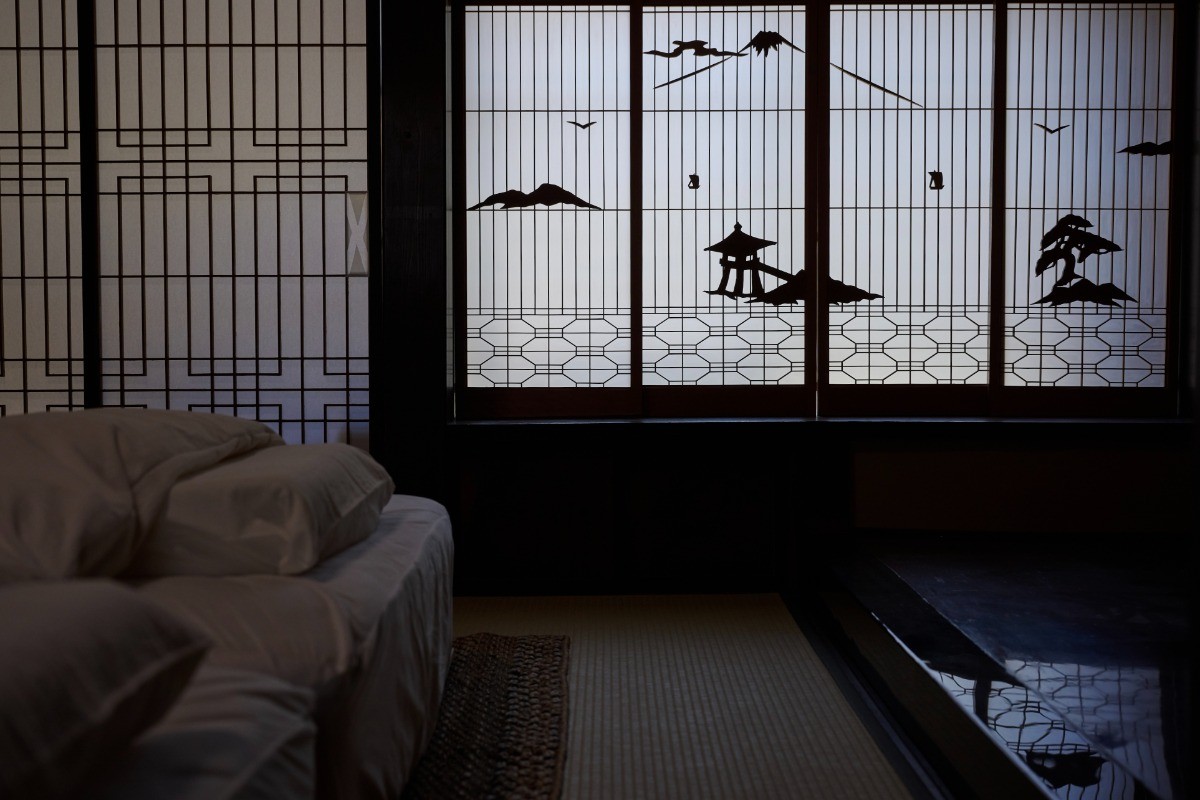 Place a Shichifukujin pillow paper—a small talisman for good dreams—beneath your pillow, and drift into deep sleep, embraced by the stillness of the mountain.
:
:
Day 2
7:00 | 祷 Inori ー Prayer
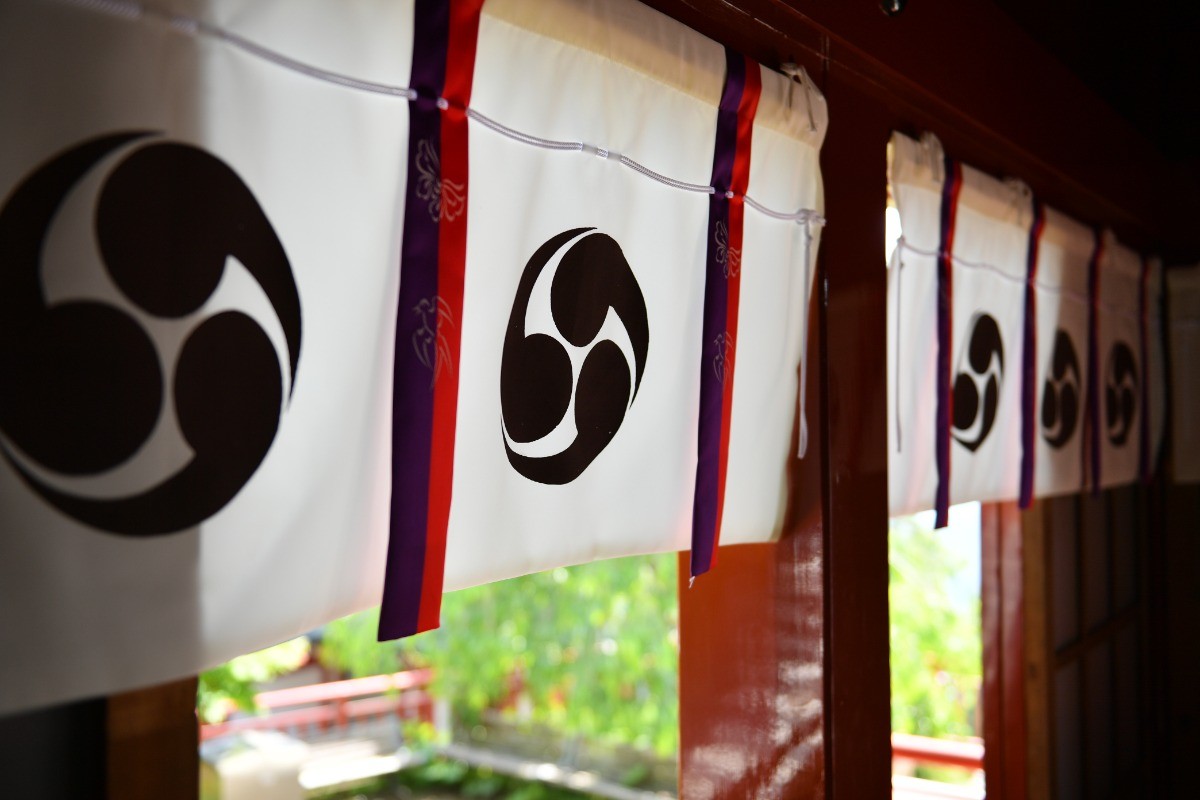 Attend a morning prayer ceremony at Musashi Mitake Shrine, open only to those staying overnight.
In the clarity of the mountain’s morning air, a sacred moment quietly unfolds.
:
:
7:45 | おさがりわっぱ Osagari Wappa ー Blessed Bento
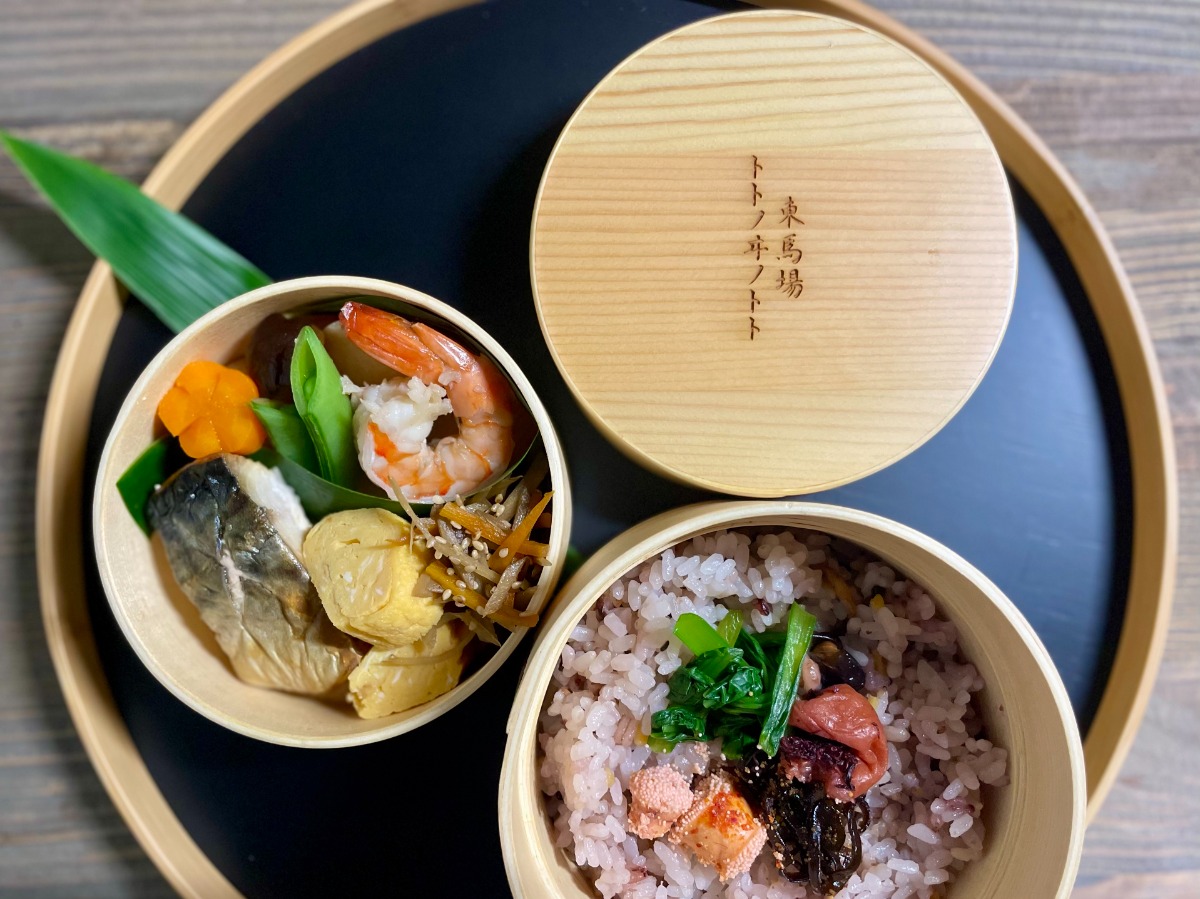 A wappa bento, prepared by the Totonoshi and filled with osagari—offerings once presented to the deities.
After the morning prayer, take your time, wherever you like, in the quiet of Mt. Mitake.
:
:
8:45 | 言霊 Kotodama ー Words
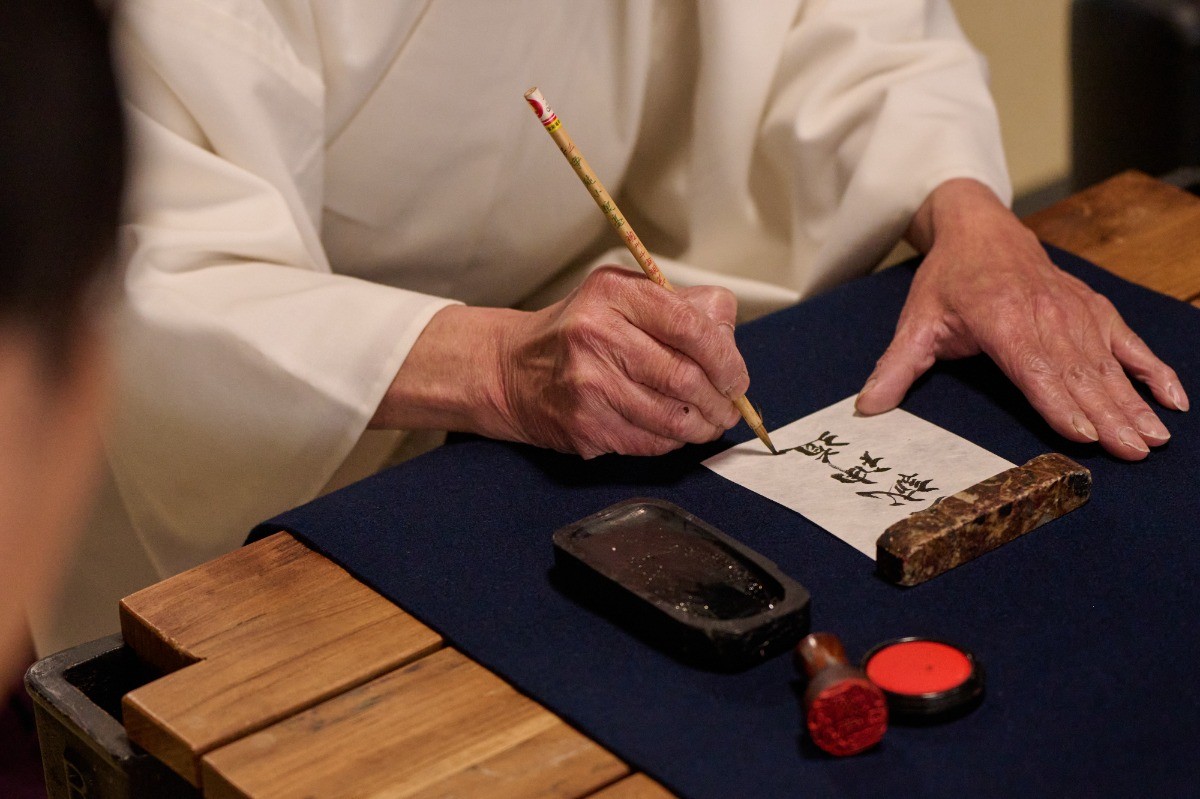 In Japan, words have long been believed to carry a spiritual power.
A word that holds special meaning for you is carefully inscribed by a Shinto priest, then presented together with the shukubo seal.
:
:
10:00 | Farewell ー Check-out
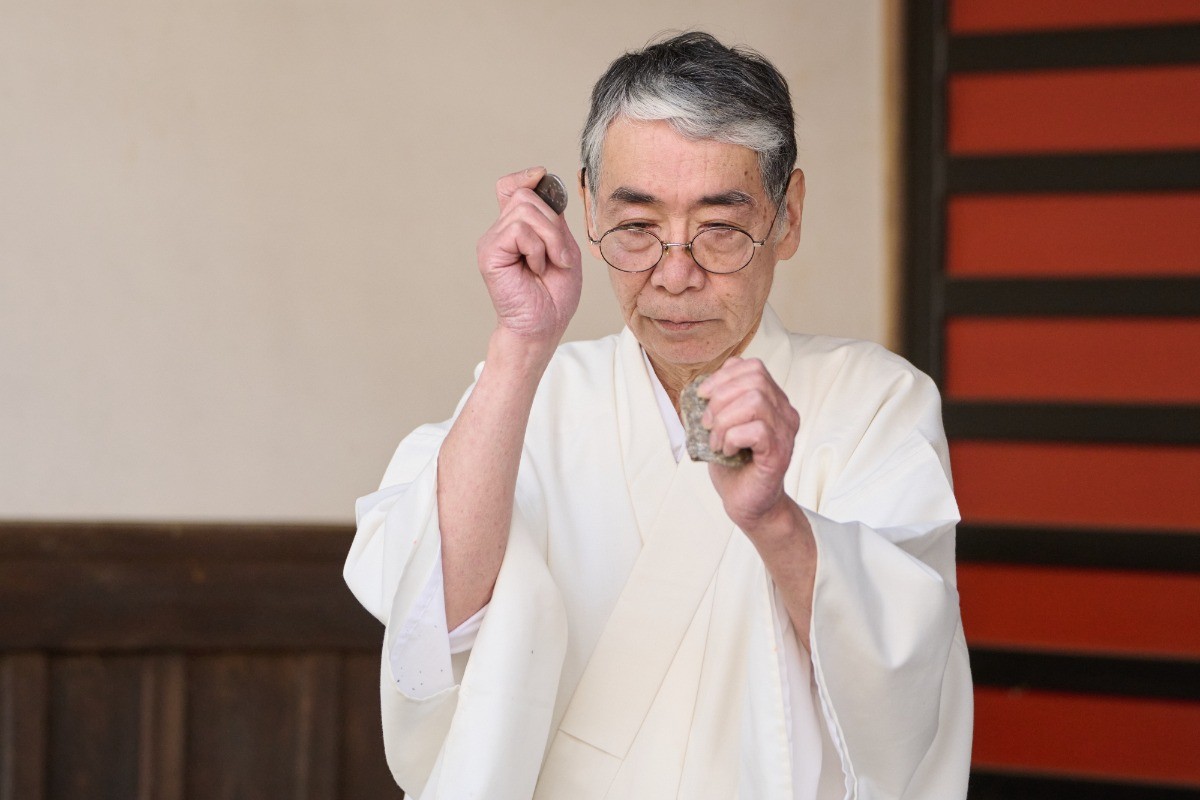 To conclude your journey, sparks struck from flint carry prayers for the days ahead, as the HIGASHIBABA family sees you off.
May the time you spent here gently lead you back to the sense of Nakaima.
:
:
Some Totonoi Activities may be adjusted or canceled due to weather or seasonal conditions. Alternative experiences will be arranged accordingly.
If there are any activities you are unable to join for health or religious reasons, alternatives can be prepared. Please feel free to inform us in advance.
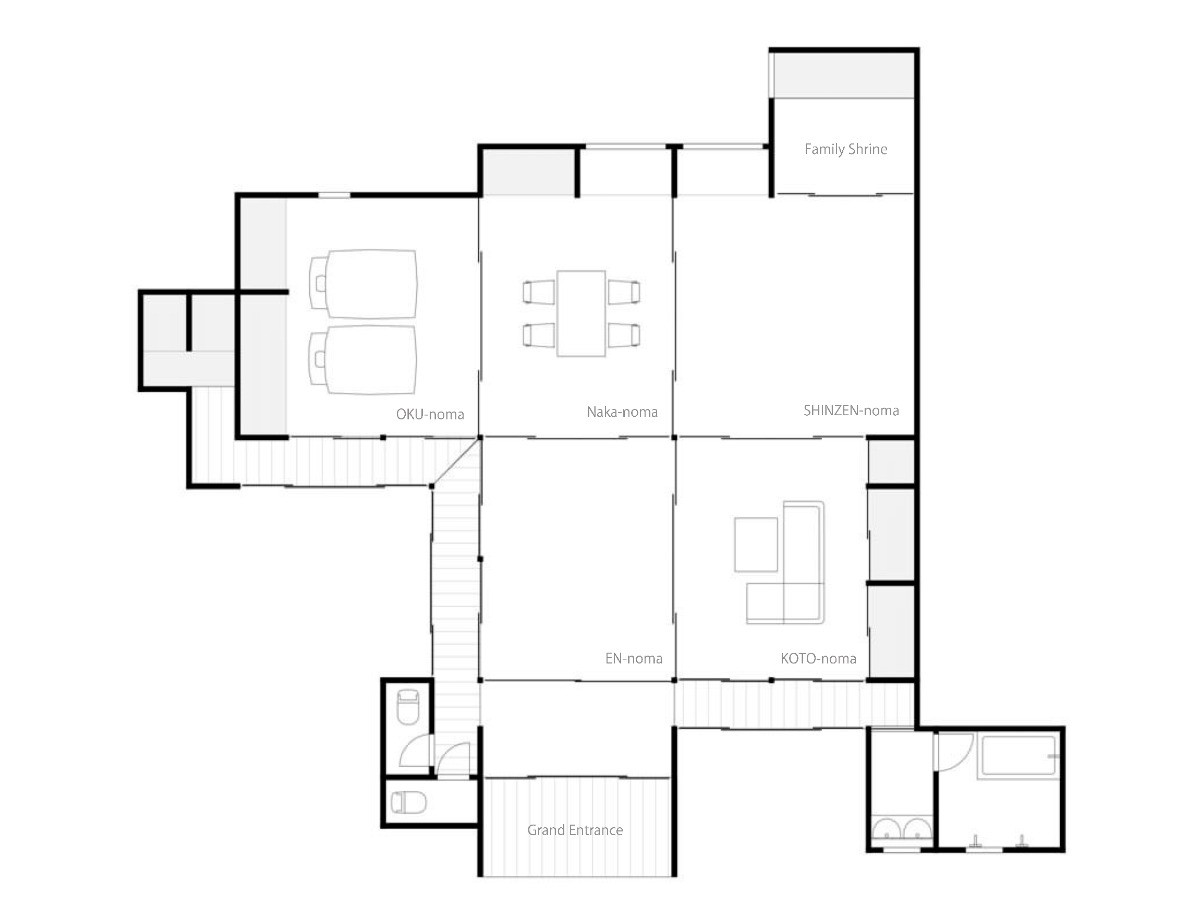
Find out more about the guest rooms here.
Discover the rich history of the BABA family and their architectural heritage here.
:
:
From 10:00 | Enjoy Even More
After checking out, we are happy to provide recommendations or assistance to ensure you make the most of your day. Here are some suggestions for activities in the surrounding area:
• Hike through the Rock Garden on Mt. Mitake, often referred to as Tokyo’s Yakushima, known for its lush greenery and serene atmosphere.
• Stroll along the Mitake Valley, where the emerald-green waters of the Tama River glisten in the sunlight.
• Engage in river activities such as canoeing, rafting, or stand-up paddle boarding (SUP).
• Visit the Ozawa Sake Brewery to enjoy a guided tour and discover the artistry behind locally brewed sake.
• Unwind at nearby hot springs, such as Tsurutsuru Onsen or Seotonoyu, for a rejuvenating experience.
Each option offers a unique way to continue your journey, making your time on and around Mt. Mitake even more memorable.
:
:
:
The Story Behind totonoinototo
Preserving Tradition, Embracing Family Creativity
Nestled in a quiet corner of the sacred forest, far removed from the bustle of Tokyo, our shukubo rests in a place where time flows gently.
Surrounded by clear mountain air and lush greenery, the thatched-roof residence offers a spacious layout of five interconnected tatami rooms (114.09㎡) with high ceilings. By day, it is filled with the sounds of nature; by night, with deep stillness.
There is something quietly transformative about this space—simply being here allows the mind to settle and the body to ease.
This shukubo has been sustained for over 400 years, supported not only by generations of the HIGASHIBABA family, but also by the enduring connection with the members of the kosha community.
As the 14th and 15th generations, we continue to care for this place—each bringing our own individuality, while nurturing the bonds that hold our family together.
A World Unlike Any Other, Woven by Our Family
When the pandemic brought our operations to a halt, we took time to reflect deeply—on what had been, and what could be.
Rather than simply continuing tradition, we chose to reimagine the role of our shukubo with a renewed sense of purpose.
Honoring what has been passed down while allowing space for each family member’s sensibility and creativity, we set out to shape something that belongs to this time.
After more than three years of exploration, what emerged was totonoinototo—an experiential stay born from the meeting point of inherited tradition and present-day creativity.
Each totonoi activity is the result of careful thought and experimentation, blending respect for tradition with the creation of new meaning.
At the heart of it all lies a single sensibility—finding a “just-right” balance.
And beneath that, the spirit of Nakaima—a way of being that invites the mind to settle into the present moment.
Staying in the Sacred Forest, Attuning to Yourself
The essence of totonoinototo is held within its name.
Written as 「調いの杜泊」, it expresses the idea of staying in a sacred forest while attuning oneself from within.
The word “杜” refers to a sacred forest, expressing the idea of a special journey set in a mystical place.
We chose the word “調える” (to attune) over “整える” (to perfect), as this journey is not about striving for completeness, but about finding one’s own natural balance—like tuning an instrument.
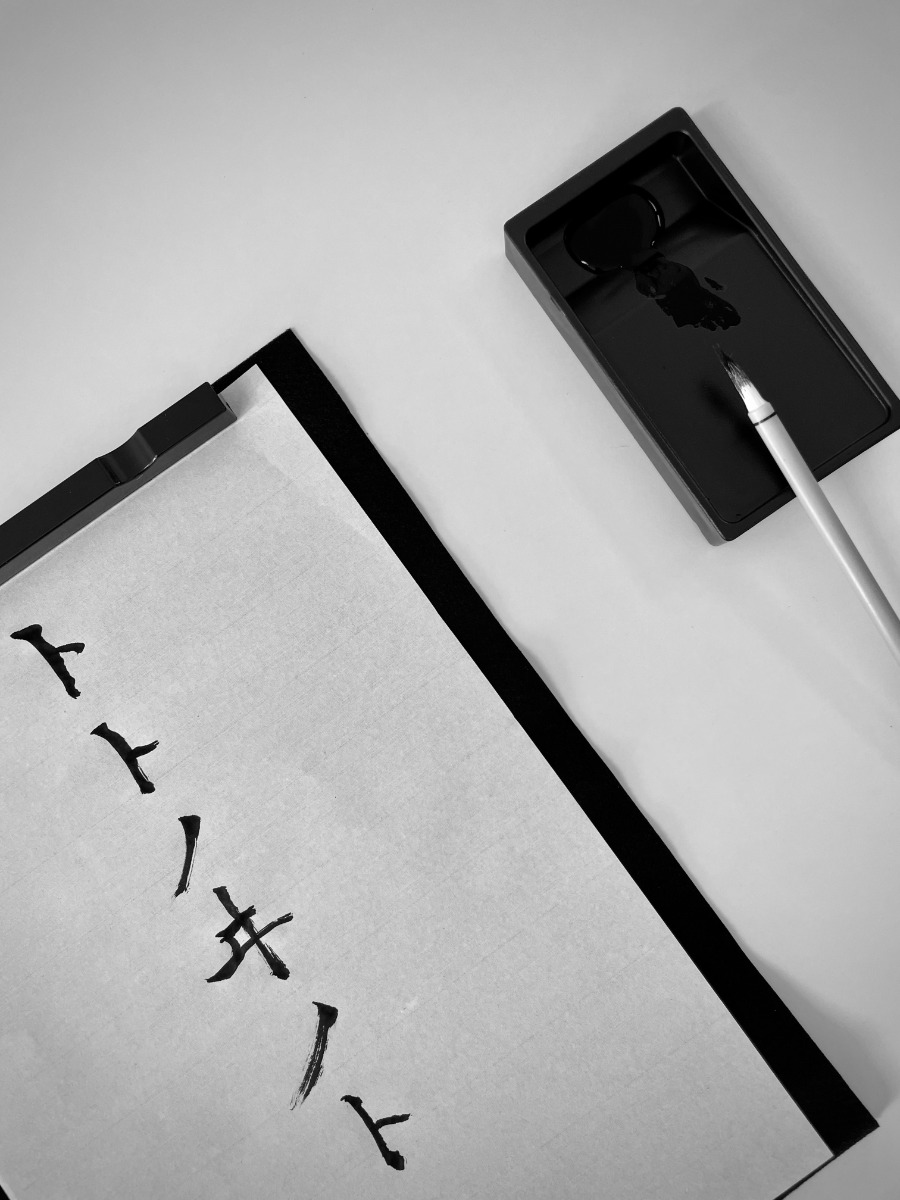
The name totonoinototo is also a palindrome, reading the same forward and backward, with the character “ヰ” at its center.
Derived from the kanji “井,” the character “ヰ” appears slightly incomplete, as if something is gently missing—yet it is this very incompleteness that holds meaning.
It reflects the quiet comfort that emerges not from perfection, but from a delicate balance.
Memories Illuminated by the Forest
We hope that your time here becomes a moment deeply held within your heart—a quiet light that continues to guide and support you in the days to come.
And until the day this sacred forest calls you back again, may the memory of this place gently remain within you, along with a sense of your own “just-right” balance.
Facility Information
Access
TOKYOOME-SHI54 MITAKESAN
Important Notes
Check-in / Check-out
Check-in
13:30 ~ 14:00
Check-out
~10:00
Policy
Cancellation Policy
Children's Policy
Facilities & Services
Room Facilities & Amenities
Amenities / Facilities / Bathroom
Facilities & Services
Food Facility / Pool・Spa
Facility Precautions
Can I stay with my pet?
As the building is registered as a Tangible Cultural Property of Tokyo, we kindly ask guests to refrain from bringing pets in order to preserve the property.
Can children stay?
As some activities, such as the outdoor sauna and herbal experiences, are designed for adults, we kindly ask that children aged 12 and under do not stay. Guests aged 13 and above are welcome. Guests under 18 must be accompanied by a parent or guardian.
Do you offer room-only stays?
We do not offer room-only stays.
How many people can stay?
As we accept only one group per day, the minimum number of guests is 2. To ensure a comfortable stay, the maximum number of guests is 4.
Is there parking available?
If you visit us by car, you can drive to Takimoto Cable Car Station at the foot of the mountain. From there, you will need to take the cable car (6 minutes) or walk (approximately 1 hour) to the top. We do not have a private parking lot, but there is a toll parking lot next to Takimoto Cable Car Station. Please note that the number of parking spaces is limited during busy periods. Guests staying at the shukubo are eligible for a discount at this parking lot only. Please present your parking ticket upon arrival.
Is the facility barrier-free?
As the building dates back to the Edo period, it is not barrier-free. Please note that there is a large step at the entrance.
Is there a TV in the room?
To allow guests to fully enjoy the natural sounds and quiet of the mountain, there are no TVs in the guest rooms.
Are alcoholic beverages available?
Beer, local sake, and canned cocktails are provided in the refrigerator. Payment is to be made at check-out.
Can I purchase food or drinks?
Dinner and breakfast are included in the accommodation fee. Complimentary water and tea are provided in your room. A limited selection of drinks and light meals from the tea house menu, as well as bottled beverages such as oolong tea and Ion Water, are also available for purchase.
Can you accommodate food allergies?
We will do our best to accommodate allergies, so please inform us at the time of booking. However, as all meals are prepared in the same kitchen, we cannot guarantee the complete removal of allergens.
Can you accommodate dietary restrictions for religious reasons?
We will do our best to accommodate your needs—please inform us at the time of booking. Please note that all meals are prepared in the same kitchen.
Can I make a reservation by phone?
We are sorry, but reservations by phone are not accepted. As totonoinototo is an experiential stay in which activities unfold over time, we ask that guests review and understand the details before making a reservation. Reservations can only be made through this booking site.
Are Totonoi Activities charged separately?
All Totonoi Activities during your stay are included in the accommodation fee.
Do I need warm clothing?
As the property is located in a mountainous area, temperatures can be around 6°C lower than in central Tokyo. Even in summer, evenings can be cool, so we recommend bringing layers. In winter, the building can become quite cold due to its traditional structure, so please dress warmly. If arriving by car in winter, please ensure your vehicle is equipped with snow tires.
Will my mobile phone work?
Mobile reception is generally available, but it may be weak in some areas due to the mountain location. Free Wi-Fi is available at the property.
Are there convenience stores or ATMs nearby?
There are no convenience stores or ATMs on the mountain, so please plan accordingly.
Can I use the sauna only?
The sauna is part of the experience and available to overnight guests only.
What should I wear for the outdoor sauna?
As the sauna is outdoors, local regulations prohibit use while naked or in swimwear. Please wear a quick-drying T-shirt and shorts. Limited rental items are available—please inform us in advance if needed.
Are there many insects?
As this is a mountain environment, there are many insects. If any enter your room and you are uncomfortable, please let us know and we will assist you.
Are there wild animals in the area?
Yes, various wildlife such as serows, flying squirrels, deer, martens, and raccoon dogs inhabit the area.
Is smoking allowed?
Smoking is prohibited inside the building. If you wish to smoke, please do so outside, away from the building, and bring a portable ashtray.
Can I leave my luggage before check-in or after check-out?
We can store your luggage within reasonable limits. Please contact us in advance.
Can I choose the Totonoi Activities?
As the activities are designed to unfold along the flow of time, they cannot be selected individually. However, the Totonoshi may adjust the experience according to the weather and your condition on the day.
Why are there no plans without activities or room-only stays?
At HIGASHIBABA, we value the way of Nakaima—quieting the mind in the here and now—and offer experiences that unfold along the flow of time. As we welcome only one group per day, each stay is carefully attuned to the individual, so that guests may arrive and depart in a state of natural ease. For this reason, stays without activities or room-only plans are not offered, and all guests are welcomed through totonoinototo.
Is English support available?
Basic English support is available. However, as only some members of our family are able to communicate in English, we may not always be able to provide full assistance. Thank you for your understanding.
What should I bring?
We recommend comfortable clothing suitable for movement and layering. What should I bring? We recommend comfortable clothing that allows for layering to adjust to changing temperatures. For the outdoor sauna, please wear a T-shirt and shorts. Rental items are available in limited quantities—please inform us in advance if needed. If you plan to walk on the mountain, we recommend proper footwear such as hiking shoes.
Can I stay alone?
Single guests are welcome; however, as only one group is accepted per day, the rate for two guests will be charged. Please make your reservation as two adults.
What happens if I arrive late?
As the experience follows a set flow, arriving late may result in missing some activities. Please let us know in advance if you expect to be late.
Is there a cancellation policy?
Cancellation fees apply from 7 days prior to your stay. Please refer to the reservation page for details.
Can I cancel due to weather?
If it is unsafe to travel due to severe weather such as typhoons or heavy snow, cancellation fees will not be charged. In such cases, we will contact you directly.
Will activities change depending on the weather?
Some activities may be changed or canceled depending on weather or seasonal conditions. In such cases, alternative experiences will be offered based on the natural conditions and your state on the day.
What payment methods are accepted?
Reservations require advance payment. On-site payments (for drinks or shop items) can be made using: • Visa / Mastercard • UnionPay • JCB / American Express / Diners Club / Discover • IC transit cards • iD / QUICPay • Alipay+ / WeChat Pay • UnionPay (QR) • COIN+ / d払い / PayPay / Rakuten Pay / Smart Code
What is a Shukubo?
A traditional lodging for visitors to shrines or temples. HIGASHIBABA is one of the Shukubo serving Musashi Mitake Shrine.
What is an Oshi?
“Naka-torimochi” — a bridge between the divine and people. A traditional role of Shinto priests serving the shrine, guiding and hosting worshippers
What is a Totonoshi?
A role unique to HIGASHIBABA, gently guiding you toward a “just right” state through knowledge of herbs and nature.
What is totonoinototo?
Inspired by the Shinto concept of “Nakaima,” a stay where activities unfold over time, gently guiding you toward a “just right” state.
What kind of stay is it?
A private, one-group-per-day experience. All experiences are included in your stay.
Who is this for?
When things don’t quite feel right, when you feel the need to pause, when you want to shift the flow of your life, this stay is for you.
Is it a strict, training-like experience?
It is not. It is a calm and comfortable experience, even for first-time visitors.
Do I need to follow any special customs?
No special customs are required. We will gently guide you through shrine etiquette.
Who will be guiding my stay?
A warm and approachable HIGASHIBABA family of shrine priests, living here. With a lineage spanning over 400 years, said to descend from one of the Four Generals of Takeda Shingen.
Do the HIGASHIBABA family live here?
The building serves as both a Shukubo and a private residence, with separate guest and living areas. We live here while welcoming guests.
How many activities are there?
In addition to the core ten, we offer many more. They are adjusted depending on the day and your condition.
What is the meaning behind the name “トトノヰノトト (totonoinototo)”?
It is a palindrome, expressing a gentle flow over time as one comes into balance. The word totonoi suggests not perfection, but finding a “just right” state. The central character “ヰ” reflects the idea that comfort can exist within imperfection.
What is the elevation of HIGASHIBABA?
It is located at 816 meters above sea level, higher than Tokyo Skytree (634 meters).
How old is the building?
It was built in 1866 (Keio 2) In earthquake-prone Japan, this is considered quite old.
Can I still enjoy my stay on a rainy day?
Yes, rainy days can be just as enjoyable. On Mt. Mitake, the rain often brings a deep mist, creating a quieter and more mystical atmosphere. Among the totonoi activities, there are also special moments offered only on rainy days.